


Jul 28, 2026
Towns Who Said No to AI Factories—And Meant It
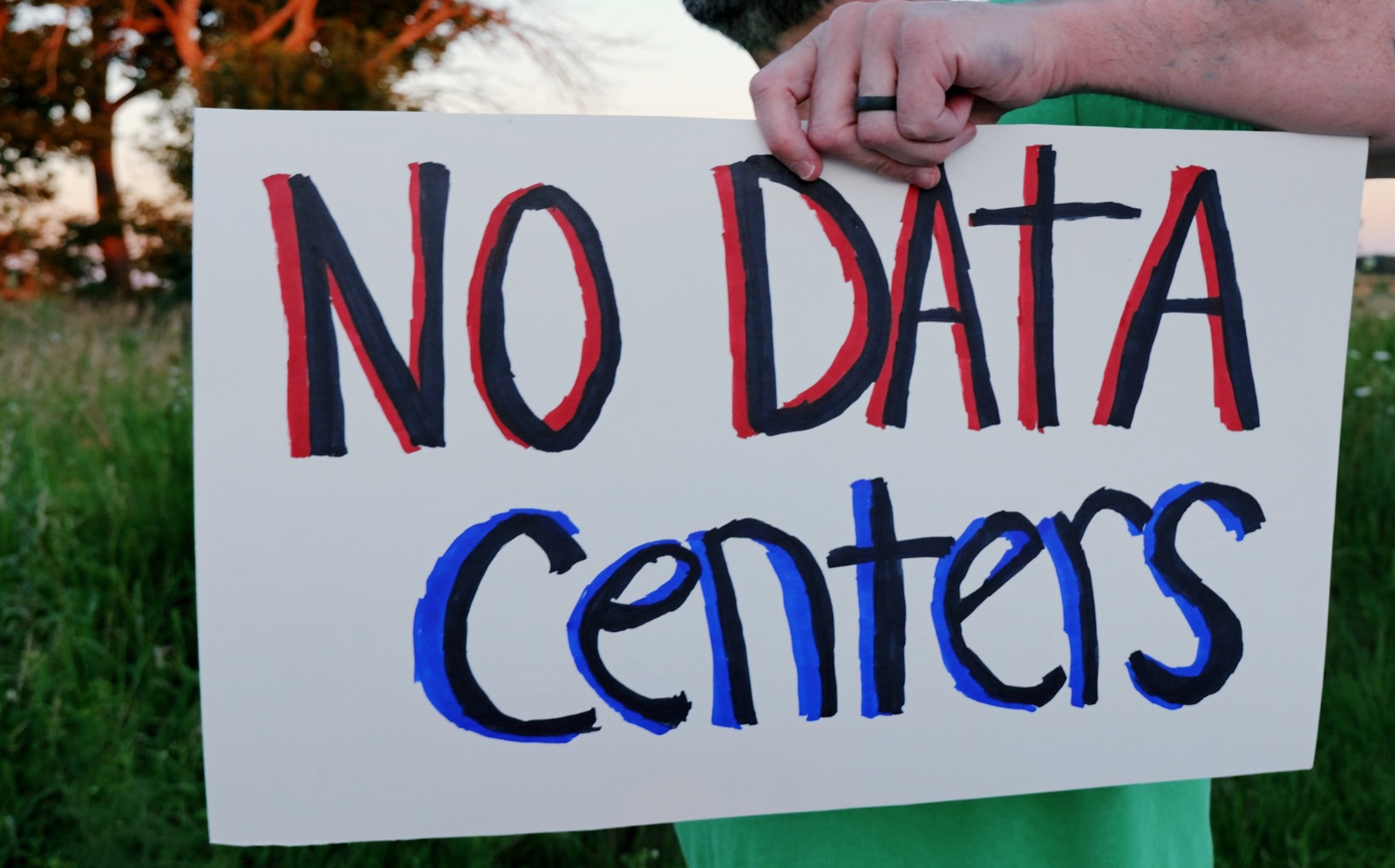
In town after town across America, residents were told that the deal was done, that the votes were counted, that the earthmovers were coming and the only question left was how gracefully to accept it.
These are the stories of towns who refused to be silenced and insisted on holding local officials accountable.
Festus, Missouri: the council approved it on a Monday, and lost the election a week later
On March 30, 2026, the Festus City Council approved a development agreement for a $6 billion data center on 360 wooded acres at the edge of town.
The developer was CRG, a subsidiary of Chicago-based Clayco. The end user has never been publicly identified.
Eight days later, Festus held a municipal election.
Every incumbent on the ballot lost. All four of them. Jim Collier, Brian Wehner, Bobby Venz, and Jim Tinnin were replaced by Karl Weekley, Allen Joseph McCarthy, Dan Moore, and Rick Belleville, every one of whom had run on transparency and opposition to the project.
A political action committee backed by labor unions that support data centers had spent nearly $40,000 late in the race on ads and signs for the incumbents.
That’s a lot of money in a local race. But it wasn’t enough to save the incumbents.
But residents didn’t stop there.
In May, citizens filed recall petitions against Mayor Sam Richards and the three remaining council members who had voted for the project.
Missouri requires signatures from a quarter of the registered voters in the affected city or ward. The Jefferson County Clerk said volunteers had collected well above the number needed.
On June 8, before a gallery of more than 100 residents, the council voted down the four resolutions that would have put the recalls on the ballot. Residents went to court, asking a judge to order the city to place them there anyway.
“Festus is just the story of another small town that’s facing this giant thing that’s trying to harm it,” resident Gabe Cotton told FOX 2. “And anybody and any community, if they organize and stand up, they can do what we’ve done here.”
(We first wrote about Festus in Festus, Missouri — Remember That Name.)
Sources: Newsweek
St. Louis Public Radio
St. Louis Post-Dispatch
FOX 2
Warrenton, Virginia: the council that approved it does not exist anymore
Warrenton is a town of about 10,000 in Fauquier County, an hour west of Washington, D.C.
In 2023, its council approved a special use permit for an Amazon data center over the objection of a great many of its residents.
By the November 2024 election, five incoming council members had been elected across two election cycles after pledging to oppose data center development.
All four members who had voted to approve the Amazon project were on their way off the council.
In effect, the town replaced the body that had disregarded its wishes.
Sources: Newsweek, citing the Fauquier Times
Data Center Watch
Cascade Locks, Oregon: recalled in June, canceled in July
In June 2023, voters in Cascade Locks recalled two Port Authority officials who had supported a $100 million data center project.
The following month, the newly constituted board canceled the project.
Four weeks is all it took for the people’s voice to be heard, loudly and clearly.
Source: Data Center Watch.
June 23, 2026: a very bad night for officials who had said yes
In primary elections across the country on a single Tuesday last month, voters removed a remarkable number of officials who had backed data center projects.
The pattern crossed party lines and state lines.
In Utah, State Senate President Stuart Adams lost his primary by more than eight points after more than two decades in the legislature. As chair of the state’s Military Installation Development Authority, Adams had helped fast-track approval for a hyperscale project in Box Elder County that at full build would be among the largest data centers in the world.
Two of the three Box Elder County commissioners who had supported it also faced primaries that day. Both lost.
A poll commissioned by local opponents and conducted by an independent firm had found more than 70% of the county opposed the county’s data center plans.
In Spartanburg County, South Carolina, the council had taken so much criticism over tax breaks for a data center that it withdrew other similar breaks, and on the Monday before the primary took the first step toward a twelve-month moratorium on new data centers. It was not enough. Both council members on the ballot lost the next day. A third, the council chair, had already declined to seek reelection, citing the data center controversy as a factor.
In Calvert County, Maryland, three incumbent county commissioners whose votes had blocked a data center moratorium all lost to challengers who had campaigned against unrestrained data center construction.
A Gallup poll conducted in March found that seven in ten Americans oppose data center construction in their local area. That figure held across party lines, at 75% of Democrats and 63% of Republicans.
Source: The Christian Science Monitor
Monterey Park, California: banned by 88 percent of the vote
Monterey Park is a city of about 60,000 in the San Gabriel Valley, east of Los Angeles. In late 2025, an Australian investment firm proposed converting an industrial site there into a data center.
Residents said most of them learned of it only shortly before it moved through city review.
The city council passed a 45-day moratorium in January 2026, extended it in March, and put a permanent citywide prohibition on the June 2 ballot.
Measure NDC passed 10,321 to 1,362. That is 88.34% of the vote, according to official results from Los Angeles County.
The ban amends the city’s own general plan and remains in force unless the voters themselves reverse it in a future election.
Monterey Park is the first city in the country to prohibit data centers by ballot measure.
The developer withdrew its applications, and the city has no data center applications pending.
Sources: Fox Business
LA Public Press
City of Monterey Park
Port Washington, Wisconsin: the voters took the checkbook
Port Washington sits on Lake Michigan north of Milwaukee. In late 2025, the city approved a $458 million tax incremental financing district to support a data center campus.
Residents organized a group called Great Lakes Neighbors United and gathered more than a thousand signatures to put a question on the April 7 ballot.
The measure requires voter approval before the city can grant tax incremental financing of more than $10 million to any project. It passed with about 66% of the vote.
The measure applies to future incentives, not to the district already approved, and business and trade groups have challenged it in court.
What Port Washington did was take the decision out of the hands of a council that had already made it once and put it in the hands of the people who live there.
Sources: Wisconsin Public Radio
Wisconsin Watch and Milwaukee Journal Sentinel
Prince William County, Virginia: even Data Center Alley has a limit
Prince William County sits at the heart of the densest data center market on earth. Its supervisors have rarely turned one down.
In July 2026, they turned down two in a single week.
The Digital Gateway, a 37-building complex beside the Manassas National Battlefield Park that the board had approved three years earlier, finally died when its last developer withdrew from a lawsuit that was headed to the Virginia Supreme Court.
Days later, after a five-hour meeting and more than 100 public comments, the supervisors declined to rezone 1,940 acres of homes and small farms for another sprawling campus.
Two of the largest data center proposals in the country, defeated inside a week, in the one county that had been assumed to be a sure thing.
Sources: E&E News by POLITICO
Virginia Mercury
What these places have in common
Each of these towns and cities was promised, more or less, what Birmingham has been promised. Jobs, tax revenue, economic activity.
They could all see that it was not in their town’s best interest. And each of them decided not to accept that the matter was settled.
Oxmoor Valley is a place worth keeping.
If you agree, join with us.