


Listen to the Oxmoor Valley
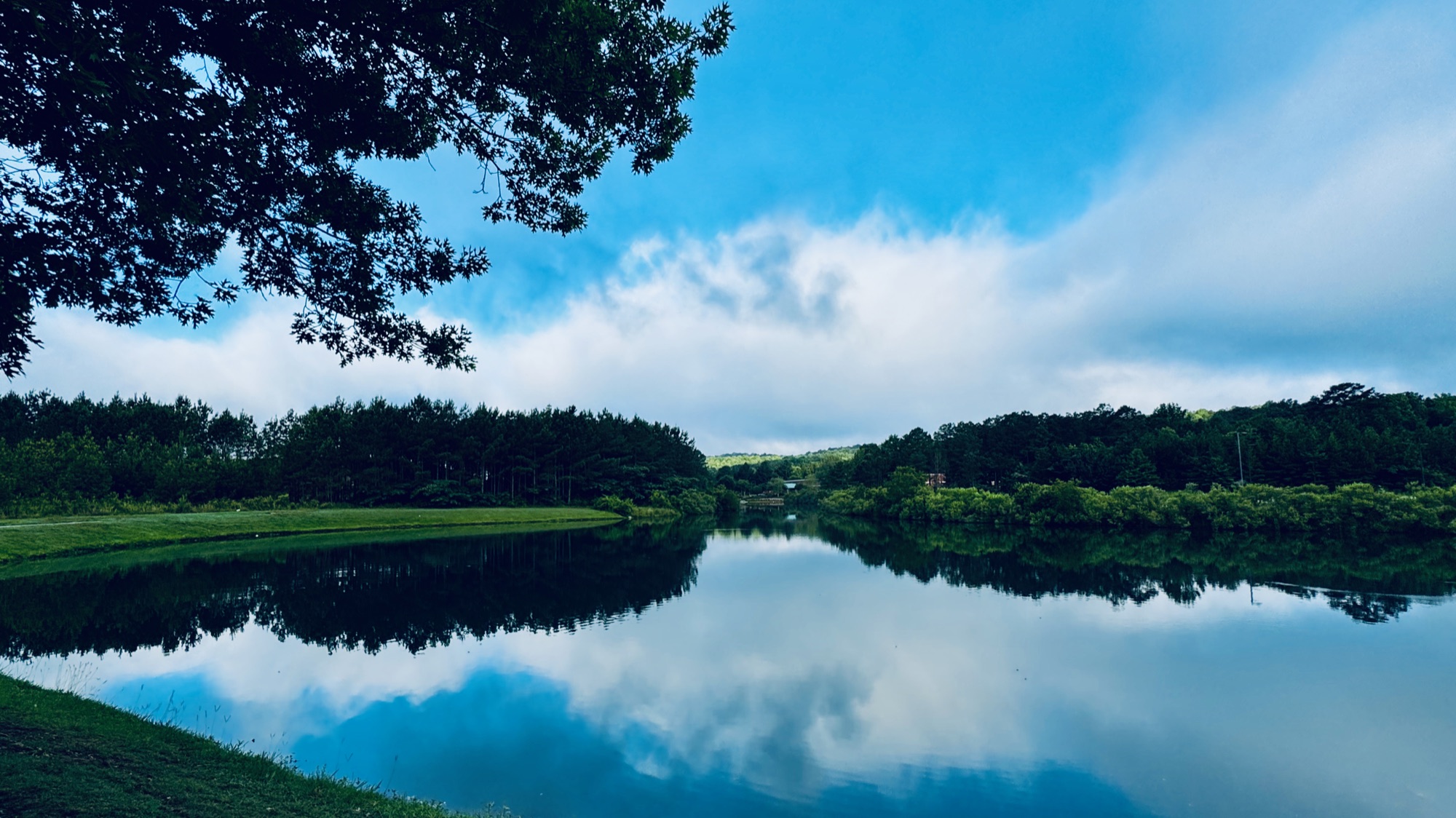
Oxmoor Valley is a beautiful, verdant neighborhood today, rich in wildlife, including birds, pest-eating bats, and other pollinators.
If an AI Mega Factory is allowed in our neighborhood, that could change forever. Noise, heat, and electromagnetic radiation can all drive out wildlife.
Click to Hear Neighborhood Birds
Here is a list of birds recently heard in the Oxmoor neighborhood.
- American Crow
- Brown-Headed Cowbird
- Northern Mockingbird
- Common Yellowthroat
- House Sparrow
- Red-Winged Blackbird
- Tufted Titmouse
- Killdeer
- House Finch
- Blue-Gray Gnatcatcher
- American Robin
- Northern Cardinal
- Canada Goose
- Blue Jay
- Eastern Towhee
- Carolina Wren
- Mourning Dove
- Chimney Swift
- Purple Martin
- Eastern Phoebe
- Orchard Oriole
- Fish Crow
- American Goldfinch
- Chipping Sparrow
- Carolina Chickadee
Nebius didn't take time to listen to the Oxmoor Valley before it tried to put an AI Mega Factory in our neighborhood.
But you can listen to birdcalls and songs heard in the neighborhood.
The Bats Above Oxmoor
Every night they fly over Oxmoor Valley, doing the unsung work bats have always done.
A single bat eats six to eight thousand insects in a night. Across the United States, bats save farmers as much as $22.9 billion every year in crop losses and pesticide costs — a service so invisible almost no one notices.
Bats see by sound.
They emit ultrasonic pulses and listen to the echoes — a system called echolocation, refined over fifty million years and capable of distinguishing a moth's wingbeat from the rustle of a leaf.
But it only works if the acoustic environment is mostly quiet.
A 300-megawatt AI factory is not quiet.
Field studies of bats living near comparable industrial noise sources — natural-gas compressor stations that run 24 hours a day, 365 days a year — have documented 70 percent reductions in bat activity, altered echolocation calls, narrower hunting bandwidth, and degraded foraging success.
The noise does not have to overlap with the echolocation frequency to cause harm. Even broadband noise below the ultrasonic range disrupts the auditory system bats depend on.
Nebius has not disclosed what BHM01 will sound like, in any frequency range, at any distance. Ask yourself why.
And remember: what is at stake is not only the bats. It is everything they do for us — the insects they eat, the pesticides farmers do not have to spray, the plants they pollinate along the way.
Why Electromagnetic Radiation Matters
Migratory birds find their way by more than sight. Many species orient by the Earth's magnetic field, and recent research locates this sense in the eye — light-dependent, tied to quantum-scale chemical reactions, most likely involving cryptochrome proteins.
The full mechanism isn't yet mapped in living birds, but the central finding is settled: birds carry a magnetic compass, and man-made electromagnetic noise can disrupt it.
A 300MW hyperscale data center is now proposed in the path of those birds.
A facility of that scale is an enormous electrical installation: high-voltage feeds, substations, transformers, switchgear, generators, power-distribution and cooling systems, and dense electronic infrastructure running day and night. It will generate electromagnetic fields and electromagnetic noise.
The birds rely on a faint natural signal — the Earth's own magnetic field — to find their way across a continent.
A 300MW hyperscale data center would lay down a powerful artificial electrical environment beneath that same airspace. Before that happens, the public deserves proof that the facility will not disrupt Nature.
The animals of Oxmoor Valley can't sign a petition. You can.