


AI Mega Factory
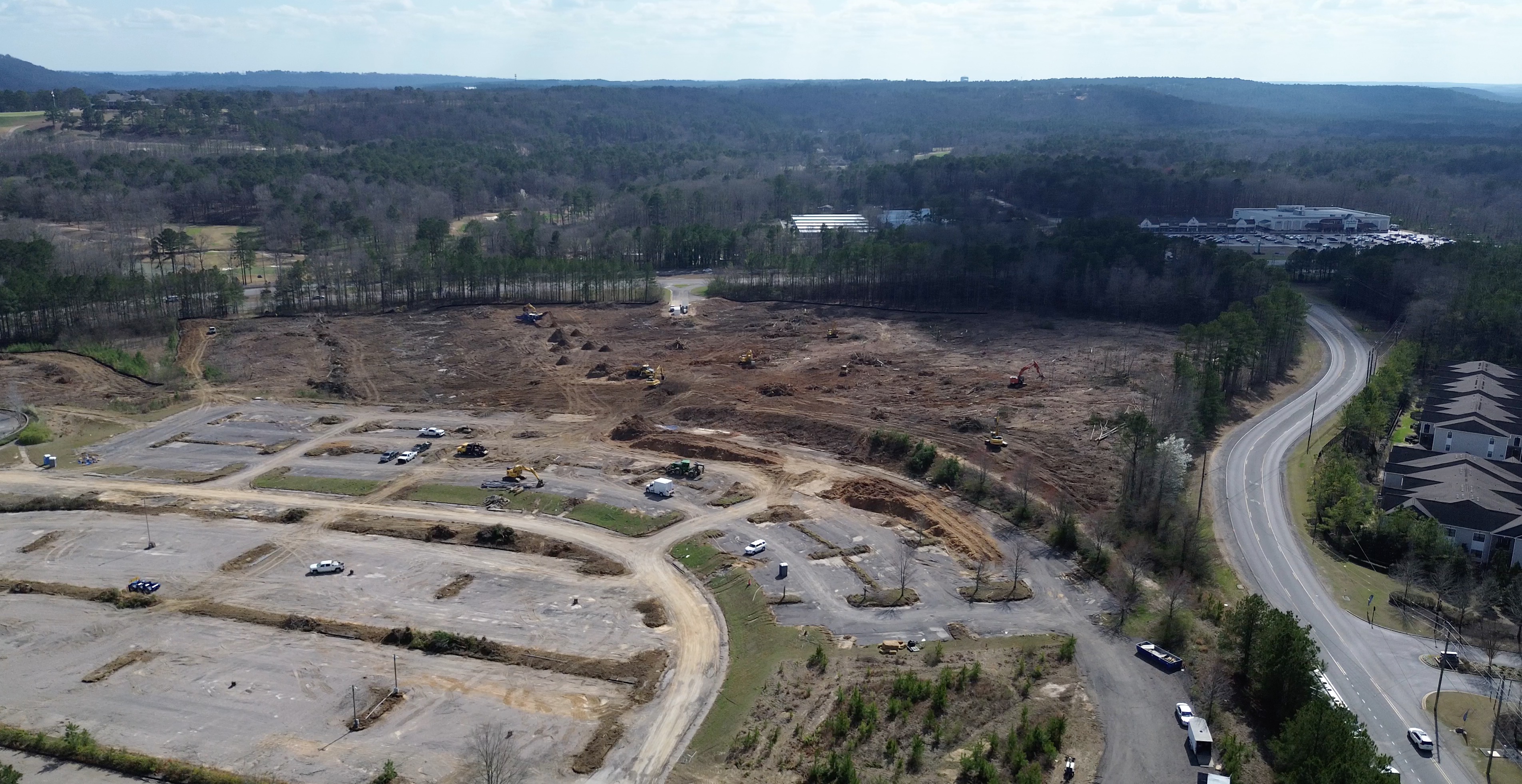
AI Mega Factory
In November 2025, Nebius Group N.V., an Amsterdam-headquartered AI infrastructure company run by billionaire Arkady Volozh, announced its intention to build a $2 billion computing facility on a roughly 79-acre tract in the heart of the Oxmoor neighborhood.
Nebius has refused to disclose a disturbing number of details about this proposed facility and what we do know is concerning.
The Facility Itself
BHM01 is an AI Mega Factory—not a conventional data center.
A conventional data center—like the one previously operated by Regions Bank in a now demolished building on the site—stores and serves data: emails, files, web pages, transaction records. Its power draw is large but variable, peaking with traffic and idling between.
An AI Mega Factory is entirely different. It runs racks of graphics processing units around the clock to train and operate large language models and other artificial intelligence systems. The power draw is enormous and continuous.
Nebius has described BHM01 as a 300-megawatt facility. For comparison, the largest conventional data centers in the Birmingham metro area today operate at a mere fraction of that scale.
The buildings themselves will be industrial in character: low-profile, windowless, ringed by perimeter security and serviced by a substantial fleet of cooling equipment, electrical switchgear, and emergency backup generators. A facility of this footprint typically requires diesel generators capable of sustaining the full computing load through a grid outage.
The Power Infrastructure
A 300-megawatt continuous load is approximately twice the residential power requirement of the entire City of Birmingham. The existing electrical grid in southwest Birmingham was not built to deliver that load to a single customer. New infrastructure is required.
Nebius has proposed two electrical facilities adjacent to the site: a switching station and a substation, each within walking distance of the Greater Birmingham Humane Society's Medical Model Animal Care Campus, designed expressly to deliver a serene, healing environment where animals can recover and be ready for adoption.
On March 26, 2026, the Birmingham Zoning Board of Adjustment denied the variance required for the switching station and the substation. The city attorney for the City of Birmingham then issued a memorandum saying the ZBA had no jurisdiction and the denials were, therefore, moot.
The Cooling Question
A 300-megawatt facility operating continuously discharges approximately one billion Btu of waste heat per hour. That heat must go somewhere, and the choice of where determines almost everything else about the facility's environmental footprint.
Most hyperscale AI facilities built in the past three years use evaporative or hybrid systems. The economics favor it: water is cheaper than the additional power required for closed-loop operation, especially in regions with low industrial water rates.
Nebius has stated that BHM01 will use a closed-loop system. The company has not publicly disclosed the design specifications, the projected daily water consumption, the initial water load, the source of intake water, or the volume and temperature of any wastewater discharge.
Any reasonable observer would wonder why they have not disclosed these critically important facts.
Why does it matter?
On May 1, 2026, every county in Alabama was in drought. Birmingham's water system, already under stress regarding the condition of its capital infrastructure, has not made public any agreement with Nebius regarding service to BHM01.
In Newton County, Georgia, where a Meta facility went into operation under a similar set of vague reassurances, the facility now draws roughly ten percent of the county's daily water supply, and county residents are now paying a 33 percent increase in water rates to fund the infrastructure required to keep up.
The Site and Its Surroundings
The Oxmoor Road parcel sits in a valley between Red Mountain and Shades Mountain, a corridor that has retained substantial tree cover and supports a documented population of resident and migratory bird species.
The Greater Birmingham Humane Society's 40,000-square-foot Medical Model Animal Care Campus, located immediately adjacent to the proposed facility, was designed around the ecological character of that valley: lakes, wooded buffer, a walking trail to Red Mountain Park, and outdoor recovery spaces for animals being rehabilitated so they are ready for adoption.
The character of the surrounding area is mixed light industrial and residential, with established neighborhoods within a quarter-mile of the proposed property line.
A 300-megawatt facility introduces four persistent local effects that have been documented at comparable installations elsewhere:
- A mechanical hum from cooling equipment, audible day and night within several hundred yards
- Thermal output sufficient to elevate ambient temperatures and alter humidity in the immediate vicinity
- Electro-magnetic radiation from the massive electrical capacity being delivered to the site through the middle of a neighborhood
- Security lighting and perimeter activity consistent with a 24-hour industrial operation
The Economics
Nebius' Birmingham project page claims it will provide $88 million per year in projected tax revenue earmarked for schools, alongside a stated capital investment of $2 billion and a construction-phase employment estimate of several hundred workers.
Permanent operational employment at hyperscale AI facilities is considerably smaller — only 78 jobs according to Nebius.
But the $88 million figure, taken on its own terms, is a gross projection.
Tax abatements available under Alabama's data center incentive framework — and which Nebius has sought in other jurisdictions — reduce the net public revenue substantially.
Infrastructure costs absorbed by Alabama Power ratepayers, by Birmingham's water system, and by the city's permitting and emergency response capacity are not netted against the projection.
Simply put, a dollar abated from one taxpayer is, in practice, a dollar collected from another, or a dollar of public service not delivered.
The Company
Nebius Group N.V. is a European company spun out of Yandex—often called "the Google of Russia."
It has plans to build three hyperscale AI factories in the U.S., but so far has no track record here.
Its CEO was sanctioned by the European Union for his role at Yandex relating to search results about the war in Ukraine that were found to support the Kremlin's narrative. The sanctions were later lifted, after he divested from Russian assets and publicly criticized the war.
Nebius insists it would be a good neighbor.
But its almost total lack of transparency and its rush to permit an industrial-scale project in the middle of the Oxmoor neighborhood—without any meaningful dialogue—does not appear to support that claim.
Click here to learn more about Nebius.
The Bottom Line
The bottom line: no AI Mega Factory should be built in the middle of the Oxmoor neighborhood. This kind of industrial-scale facility will forever change the nature and complexion of this peaceful neighborhood.
BHM01 belongs somewhere else, where the zoning permits this kind of industrial installation—not in a residential, small business, and light industrial area like Oxmoor.